Personal injury law: The importance of evidence in car accident claims
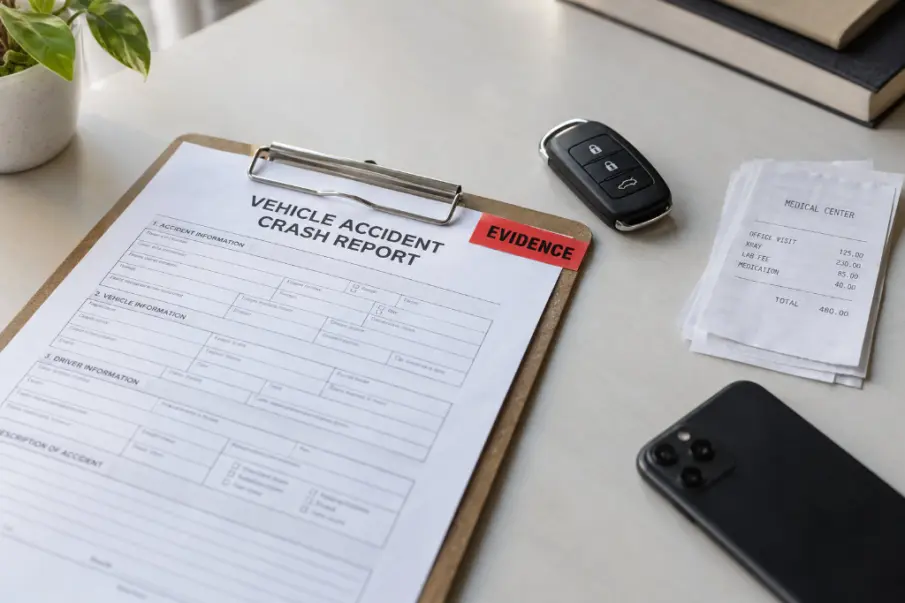
Evidence plays a crucial role in personal injury law, especially when building a strong car accident injury claim. Understanding what types of documentation matter and how to organize them can make a decisive difference in establishing liability and damages. Acting quickly to preserve evidence is essential for achieving fair outcomes after a crash.
In personal injury law, the success of a car accident claim often depends on clear and convincing evidence. From the moments after the collision to the process of negotiation or litigation, records and documentation allow all parties to assess fault, causation, and compensation. Legal professionals such as auto crash attorneys rely on comprehensive evidence to build the strongest possible case for those injured in an accident. Knowing what evidence matters, and how to protect it, can help accident victims protect their rights and interests.
Essential types of evidence in car accident claims
A successful car accident claim requires several categories of evidence, each serving a specific purpose in the legal process. Police crash reports provide an official summary of events and may record immediate observations, incident numbers, and any citations. While helpful, these reports are not always perfect; missing details or errors can limit their impact and should be supplemented by additional documentation.
Another critical form of evidence is medical documentation. Emergency department records, test results, and doctor notes help prove the existence, severity, and timeline of injuries in relation to the accident. These records create a chain linking the injury to the crash date, helping clarify whether injuries were caused by the collision or existed beforehand. Photographs of the accident scene, damage to vehicles, and road conditions also support claims by providing objective context about the force and circumstances involved.
Supporting liability, causation, and damages with evidence
Every personal injury claim arising from a car accident turns on three foundational legal elements: liability, causation, and damages. Evidence ties these elements together, demonstrating what happened, who was responsible, and how much was lost. Police reports, photos, and witness statements can help establish liability by clarifying who breached a duty of care.
Causation is supported by showing that injuries stemmed directly from the crash, something medical records and vehicle damage documentation help confirm. Validating damages relies on quantifying losses: bills, pay stubs, rehabilitation expenses, and documentation for ongoing care all render the true financial effects tangible. Thorough documentation ensures that adjusters and courts have a clear picture of the impact the accident had on those injured.
Challenges and mistakes in handling evidence
Even strong cases can be undermined when key evidence is missing or mishandled. Delays in medical evaluation, failing to report symptoms fully, or neglecting to keep a consistent treatment record can give insurers reason to dispute a claim. Inconsistencies between different pieces of evidence, like a witness statement that conflicts with social media accounts, can affect the credibility of an injured party's version of events.
There are also risks related to the loss or alteration of digital records: dashcam footage can be lost or overwritten, security videos may be erased, and paper records can be misplaced. Relying on a single source of evidence is hazardous in case new information changes the initial understanding of the crash. Maintaining a diverse and thorough collection of documentation helps overcome these challenges.
The role of legal teams in preserving evidence
Professional legal teams, such as The Husband & Wife Law Team, emphasize the need to act quickly and stay organized when collecting and preserving evidence. Vehicles may be repaired, scrapped, or lost soon after a crash, and valuable digital records can disappear if not retrieved promptly. Keeping a well-organized file with medical records, receipts, witness contact details, photographs, and correspondence is vital throughout the claims process.
Thorough, timely documentation gives both accident victims and their advocates the strongest basis for seeking fair results. In a system where the available proof can determine the outcome, assembling and maintaining robust evidence is fundamental to achieving justice in personal injury law after a car accident.