Zuckerberg lays out Meta’s AI policy, calls for US government access to unreleased models
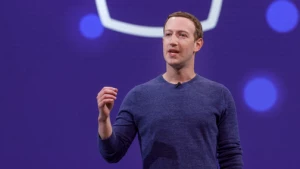
 Meta CEO Mark Zuckerberg advocates for distributing AI capabilities to individuals and sharing unreleased model checkpoints with the U.S. government to enhance security.
Summary
On August 10, 2026, Meta CEO Mark Zuckerberg published an essay titled "The Future is for Everyone" advocating for the distribution of AI capabilities to individuals instead of concentrating them within a few institutions. In addition to outlining this philosophy, he proposes that frontier AI labs provide the U.S. government with intermediate training checkpoints of unreleased models before public launch. This would allow officials to strengthen critical infrastructure against emerging risks. Zuckerberg's key recommendation is for companies developing advanced AI systems to share technical staff and in-progress model checkpoints with the government during training, rather than only after a model is completed. He suggests this approach would help officials secure government systems and identify security gaps without delaying or limiting public access to new AI products. He also argues that this cooperation would address AI-related cybersecurity threats, biological risks, and geopolitical competition with China by creating a single channel for lab-to-government collaboration. The essay rejects the idea that safety requires concentrating powerful AI with a few trusted labs or experts. Instead, he argues that broadly distributing AI capabilities leads to safer outcomes by preventing any single actor from gaining an excessive advantage. He uses the analogy of a superintelligent lawyer: it is dangerous if only one party has access, but becomes self-correcting if everyone does. He applies the same reasoning to open-source AI models, stating that broad deployment makes security vulnerabilities easier to identify and address. Meta commits to several specific product and policy positions in the piece, including a free tier of its AI tools intended to reach "billions of people," a fully private processing mode for personal AI agents, a resumption of open-source model releases from Meta Superintelligence Labs, and a new governance structure giving Meta's independent board authority to approve safety criteria for model releases. The essay builds on Zuckerberg's earlier Wall Street Journal op-ed from July 28, 2026, and coincides with Meta's release of Muse Glimmer, a 30-billion-parameter open-weight agentic model under an Apache 2.0 licence.
(Source:Medianama)