Law firms face sanctions and governance gaps as AI hallucinations spread through legal filings
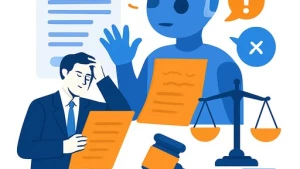
 Law firms face growing sanctions and governance challenges as AI-generated hallucinations and unauthorized 'shadow AI' tools compromise legal filings.
Summary
U.S. courts have imposed over $145,000 in sanctions against law firms in the first quarter of 2026 for submitting briefs containing fabricated legal reasoning and fake citations generated by artificial intelligence. More than 300 federal judges have adopted standing orders addressing AI use in filings, and a database tracking AI-related legal decisions has cataloged over 1,369 cases involving hallucinations. The problem extends beyond simple factual errors; generative AI systems now produce convincing but entirely fictional legal theories that pass traditional verification checks. Cat Casey, legal tech expert and partner at Masters AI Legal, noted that "a hallucinated legal theory passes every cite check and still blows up your case." Beyond hallucinations, law firms face a second threat: employees using unapproved AI tools without authorization. Andrew Adams, partner and chief administrative officer at DarrowEverett, called shadow AI arguably more dangerous because it operates outside any governance framework. A National Cybersecurity Alliance survey found that 43% of employees using AI admitted to sharing sensitive company information with AI tools without their employer's knowledge. Lawyers cannot assume outputs are trustworthy simply because they come from established legal research platforms. A 2024 Stanford-led study found hallucination rates of roughly 33% for Westlaw AI-Assisted Research and 17% for Lexis+ AI under benchmark testing. Casey identified three main types of hallucinations: wholesale case fabrication, fake quotes attributed to real cases, and real cases with authentic citations attached to arguments unrelated to the case. Warning signs include cases that fit a fact pattern too perfectly, opinions with balanced, clean prose and no hedging language, and cases cited multiple times across different arguments or fact patterns. Under Rule 11 and its state equivalents, every attorney who signs a filing certifies that legal contentions are warranted by existing law. That certification cannot be outsourced to a machine. Adams said verification is not optional. Firms and corporate legal departments that fail to treat AI governance with the same rigor as cybersecurity or conflicts management are exposing themselves to substantial risk. Courts have made clear that communications with unsecured third-party AI systems may not be privileged and may be used against parties in litigation. Effective governance requires access controls, training, and proper review of litigation filings. Law firms must ensure deliverables are audited for hallucinations, particularly when authorized AI programs are used.
(Source:Complete Ai Training)