Healthcare’s AI Test
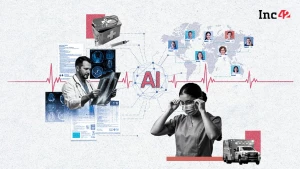
 AI is being increasingly implemented in Indian healthcare to address access gaps, shifting from model building to real-world clinical integration.
Summary
The article discusses the evolving role of Artificial Intelligence (AI) in Indian healthcare, moving beyond initial model development to practical deployment and integration within existing systems. India faces a significant shortage of healthcare professionals, with a doctor-population ratio below WHO recommendations. While numerous healthcare AI startups are emerging, the challenge lies in bridging the gap between the promise of AI and its on-ground reality. The focus is shifting towards embedding AI as a native layer within healthcare workflows – screening, diagnosis, and follow-ups – and targeting risk triaging before patients reach specialists.
Companies are developing 'agentic AI' systems that reason through multiple steps to mimic clinical decision-making, particularly in areas like radiology where structured data and specialist shortages exist. AI is being used to reduce turnaround times in diagnostics, such as stroke workflows in Punjab, and is increasingly viewed as a co-pilot for clinicians, handling tasks like pre-classifying samples and flagging abnormalities. However, adoption is hindered by factors like fear of redundancy, lack of incentives, and unrealistic expectations.
The article highlights the need for better data systems, interoperability, and clinician training to facilitate wider AI adoption. While governments are early adopters in public health programs, private adoption is driven by teleradiology and diagnostic chains. Ultimately, successful AI implementation in healthcare hinges on demonstrating measurable impact and reducing friction for clinicians, rather than simply replacing them.
(Source:Inc42)