The Real Risk in AI Teams Is Missing Review Loops, Not Missing Models
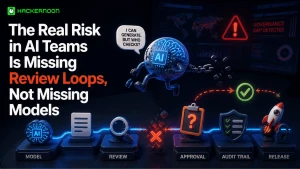
 The true risk for AI teams lies in lacking structured human review processes rather than having inadequate models.
Summary
The article argues that the primary risk in AI implementation is not model inadequacy, but the absence of structured human review loops. Using recent legal sanctions as a case study, the author highlights that courts are punishing the failure to verify AI-generated content rather than the use of AI itself. As AI-generated errors become more frequent and costly, organizations face significant financial and reputational risks if they treat human oversight as optional or decorative.
Teams often fail to implement effective loops due to human tendencies: fluency is mistaken for accuracy, speed is prioritized over verification, and the safety mechanisms present in prototypes are often lost during scaling to production. A functional review loop must include a defined trigger, a named reviewer with actual authority, a clear reference standard, and a feedback path that allows errors to improve the system.
Ultimately, the author suggests that even a mediocre model can be made trustworthy through robust review processes, whereas even the most advanced models can create massive liability without them. To mitigate risk, leaders must audit their highest-consequence outputs by asking a simple question: "When this is wrong, what catches it?"
(Source:Hackernoon)